
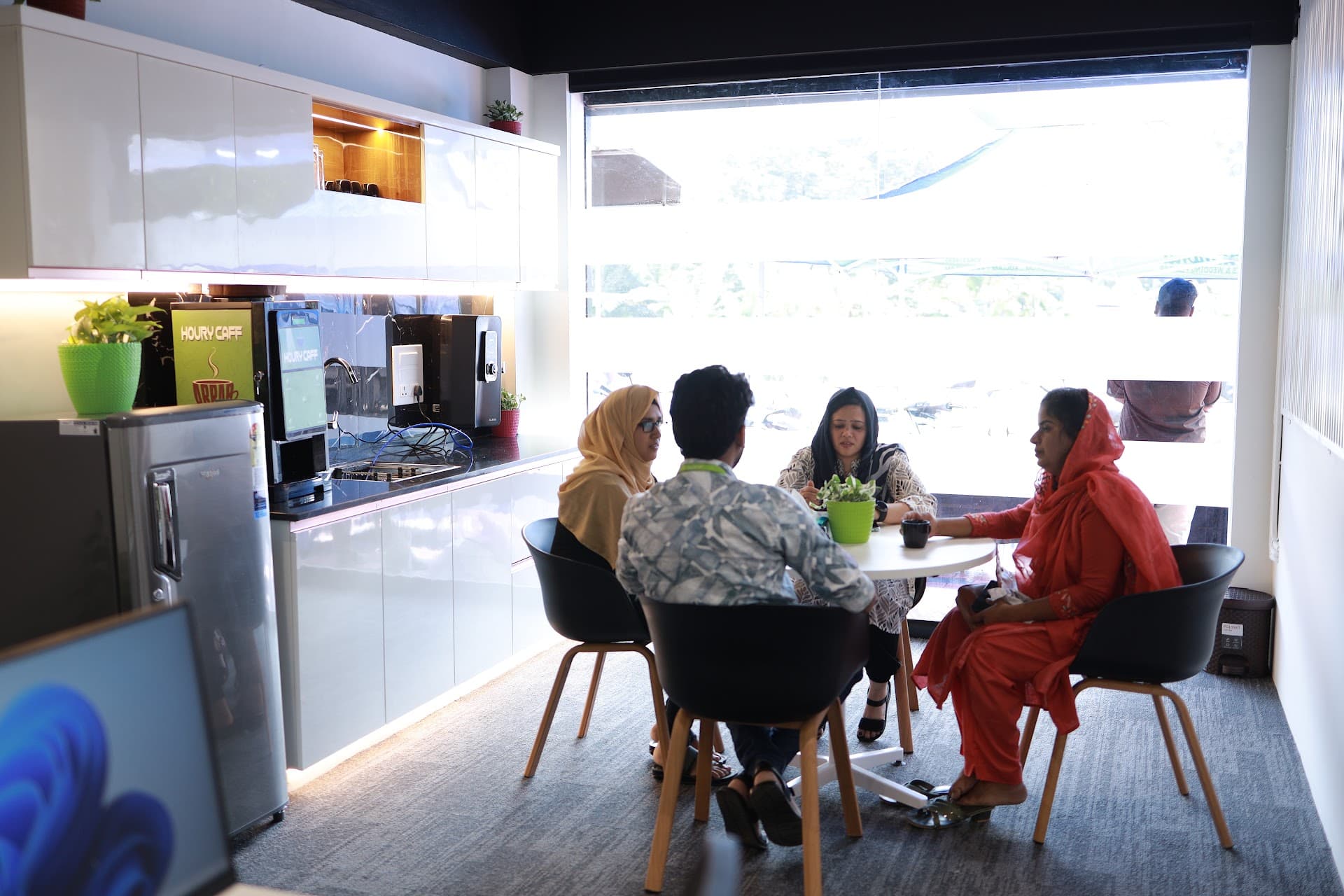
Kerala's education system produces English-fluent graduates in rural local bodies, not just in three cities. That is why back-office quality holds up outside the metros, and why a centre can be staffed from within fifteen kilometres.
Attrition is the tax every offshore centre pays. When people work minutes from home rather than migrating to a city, the reason to leave disappears, and the process knowledge you paid to build stays in the building.
State-backed fibre reaches rural local bodies across Kerala. Every centre runs on it with a redundant link and power backup as standard, so a village address carries enterprise-grade bandwidth.
The specification is what an enterprise expects in a city tower. The cost base is what a village allows. That gap is the entire economic argument for distributed capability centres.
Kerala's GCC Policy 2025-30 puts active incentives, academic partnerships and a growing service-provider base behind capability centres, with stable governance around them.
The network is spread across the state, not one campus. Sites in many districts mean no single point of failure, and capacity that flexes centre by centre.
We will arrange the visit, the travel from Kochi or Trivandrum, and a working floor to sit in for a day.